ROUD 102: Annachie Gordon
AKA: Lord Saltoun and Auchanachie, Young Annochie, Archie D

From the “forced betrothal with a tragic end” genre of ballad, poor Jeannie is in love with the the titular seafaring dreamboat, but is matched for status purposes to some random Lord with lands as far as the eye can see. After some harrowing attempts at sexual abuse, Jeannie dies of stress and yearning, shortly followed to the grave by her true love, returning from his travels to discover the whole fateful mess.
While the story is based within an area rich in ballad history, namely the north east coastal region of Aberdeenshire, home to both the Frasers of Philorth (the family intrinsically linked to the Saltoun peerage) and the much balladised Gordon clan (see previous entry for an example) there’s nothing to suggest this is anything other than some poetic imaginings regarding the tragedy of forbidden true love. There are tantalising links to real life, including the title: Annachie is a contraction of Auchanachie, a place in Aberdeenshire that was home to an important ancestral seat of the Gordon clan. Also the place name Buchan is mentioned in most versions, which is a coastal area in north east Aberdeenshire, and also home to a slew of Gordons.
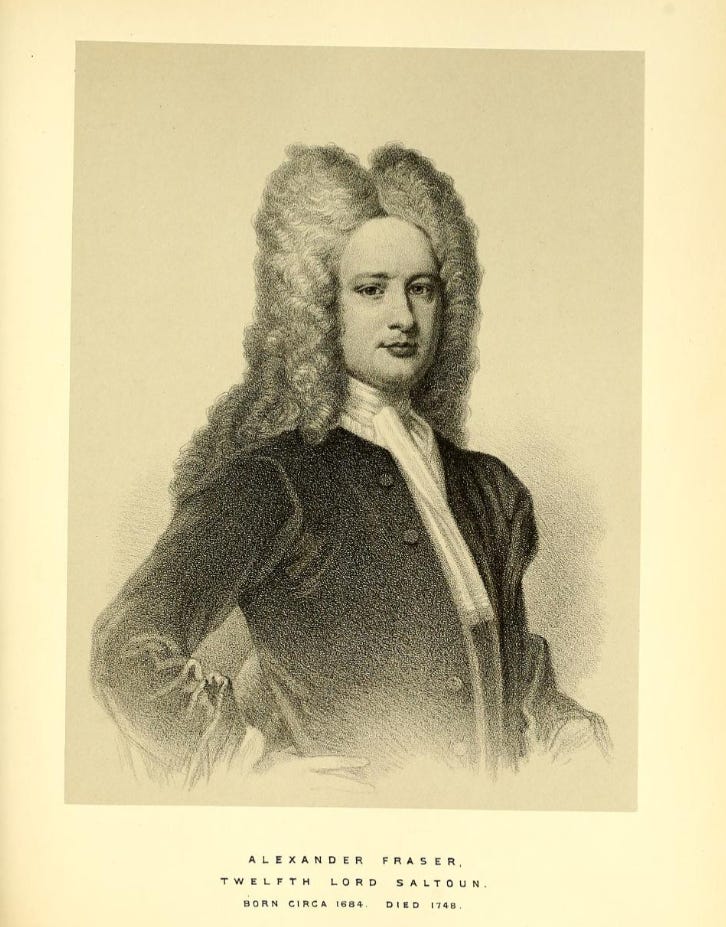
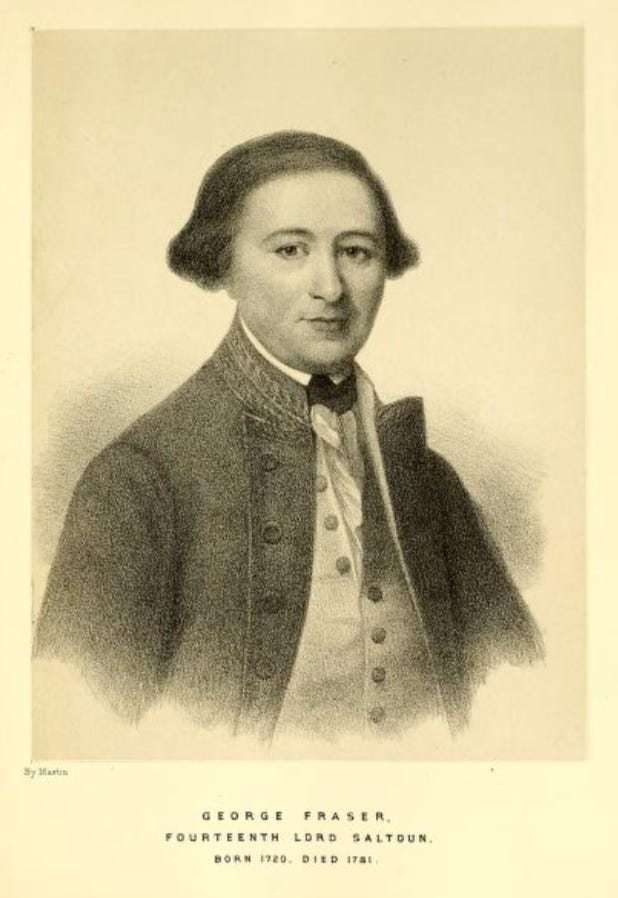
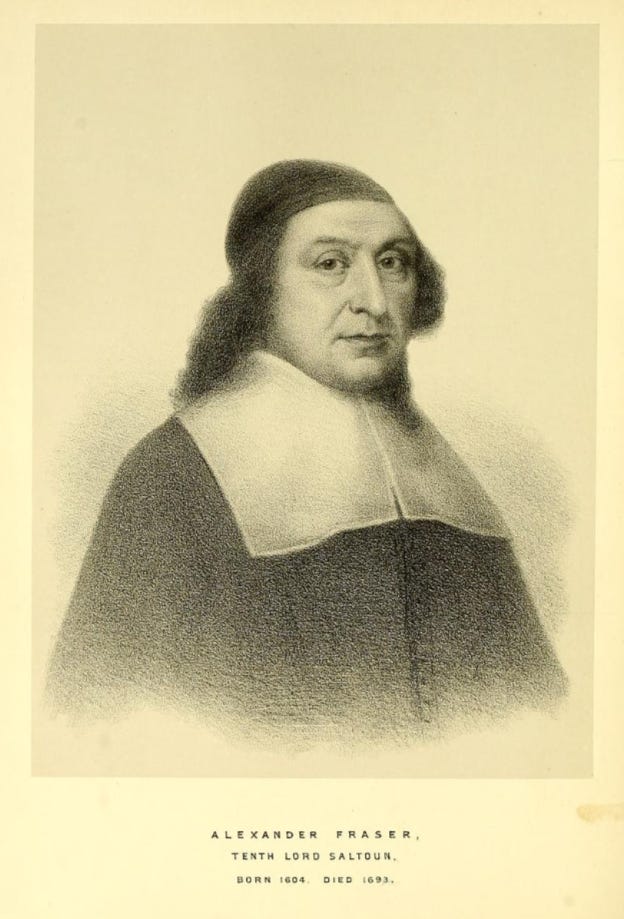
There is little else to say, so I will present you with a gallery of Lords of Saltoun from around the 17th century, the sweet spot of ballad composition in this area. While we have no evidence that none of these men are guilty of the crimes against love set out in the ballad, I think it’s useful to see the sort of characters that were in the ballad writers’ minds when picking likely candidates for such wanton roguery (although the true rogue is of course Jeannie’s downright evil dad).
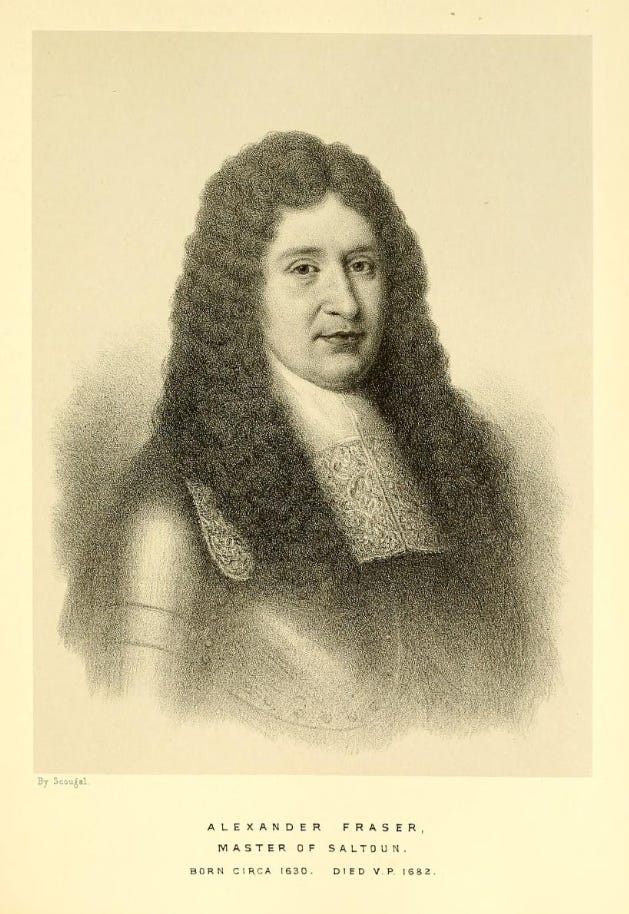
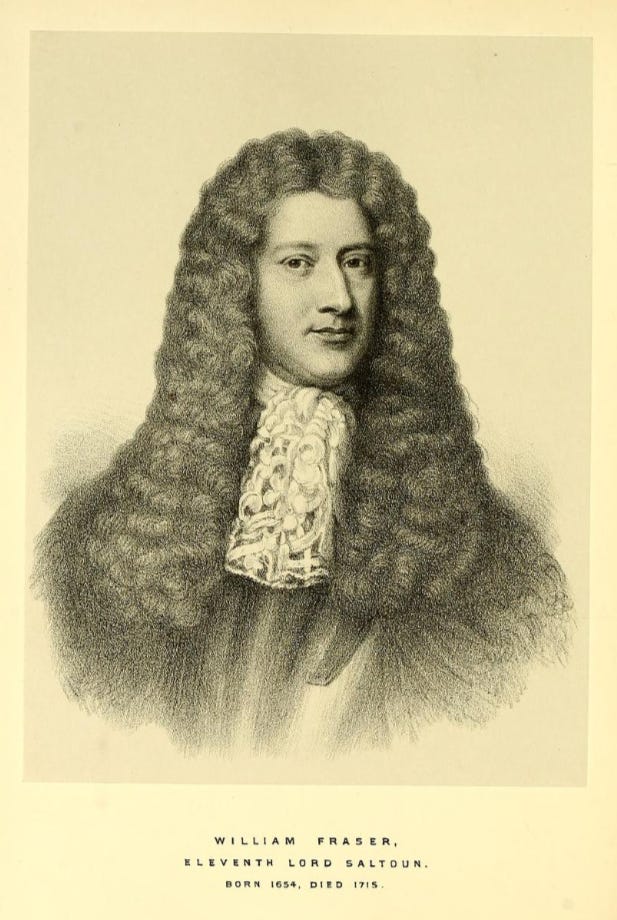
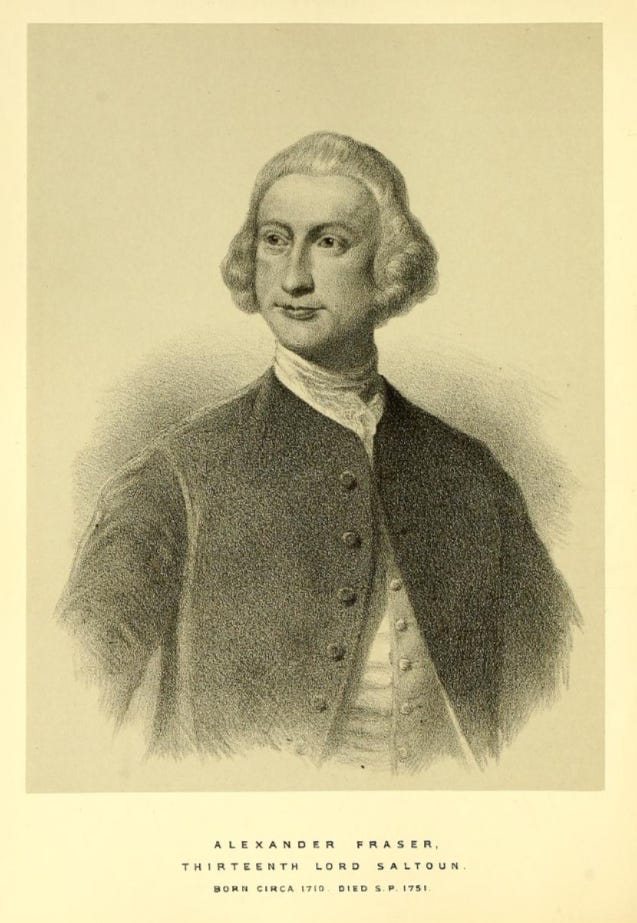
Music
Despite relatively few entries in the Roud index (meaning it was unlikely to be a popular ballad in its time), this is very popular today, I imagine mostly due to its compelling, emotional and surprisingly contemporary setting (notable for being in the first person, which is a little unusual in balladry, but definitely gives is more relatable emotional impact), adapted by Nic Jones during the folk revival based on the version published by William Christie in 1876 (see Sources below). The long Youtube playlist is replete with almost identical versions from singers of every age, nationality and skillset. There is one notable exception, this unaccompanied version from Joe Rae, the Lanarkshire based singer and carpenter much beloved in the traditional folk scene, steeped as he was in the oral singing tradition of Scotland, until his death in 2019. This recording was made in 2001, and can be found on his album “The Broom Blooms Bonny” which can be bought in digital form for a mere two English (or Scottish) pounds here.
The sleevenotes included with Joe’s album reveal that he learned it from his grandfather, who in turn learned it from a soldier (and member of the Gordon family) during the Boer War in South Africa around the year 1900. While it differs from the Christie manuscript, you can’t argue with that kind of provenance.
Our earliest recording of this ballad comes, surprisingly, from America. Aunt Molly Jackson was a folk singer from New York known to take Child’s ballads from print and bring to life in a bluesy Appalachian style. She was recorded in 1939 by Alan and Elizabeth Lomax with what is clearly a version of this ballad, under the title “Archie D”:
Her choice of names is interesting, with Annachie Gordon becoming Archie D, and Lord Saltoun becoming Bill Shelton. Further interestingly it has a similar tune to the Joe Rae version.
Back in the UK, the song really came alive during the folk revival. Nic Jones resurrected version based on Christie’s air appeared in the mid 1970s, and he recorded it live for John Peel’s eclectic and influential BBC radio show in 1976:
A year later, Nic recorded it for his album The Noah’s Ark Trap. Like most of Nic’s recordings, this is currently lost in the mire of record company wranglings, and is not currently available to listen to online, and can only be heard via the medium of somewhat expensive second hand vinyl. It’s very similar to the John Peel version though, with Nic accompanying it solo on guitar, unlike the more instrumented tracks on the rest of the album.
Nic Jones’ recording was the inpiration for extremely popular Irish singing legend Mary Black when she recorded it for her first eponymous album in 1983. She performed it frequently, including on Christy Moore’s TV show, and Youtube has kindly preserved this treasure for our enjoyment today:
One more notable big name version that is well worth a listen comes from Sharon Shannon’s album “Libertango”, in which she enlists the help of some of her celebrity pals to take on some folk standards. She is joined by Sinead O’Connor for her version of “Anachie Gordon”.
As you can see from the playlist, most singers take a very similar approach; the tragedy of the story and the heart-wrenching storytelling really lead you along that path. But one notable example is this spirited interpretation from Stuart Martz, US singer and apparently actor and voiceover artist:
A very enjoyable (if that’s the word for such a grim tale) recent version includes this from the wonderful Jenn Butterworth, with the expected beautiful guitar work:
Rare finds
Not really rare, but also not readily available, this ballad appears on June Tabor’s 2005 CD box set “Always”, which is not currently available online or in the shops. However, thanks to the generosity of the paying subscribers, I managed to source a slightly battered secondhand copy. And I’m glad I did - it has a really interesting version of Annachie Gordon, accompanied in an unsettling and sparse arrangement by Mark Emerson on viola, recorded live in McCabe’s Guitar Shop, Santa Monica on 21 March 1991. Here’s a clip:
Full track after the paywall for paying subscribers.
June also performed it for a John Peel session in 1990 with the Oysterband, but wasn’t happy with it, and it was never performed again. I can’t find a recording, unfortunately.
Sources
Francis Child’s commentary can be found here. The Roud index entries are here. Details of recordings and sleevenotes can be found on the Mainly Norfolk page.
The earliest mention of this ballad is in a now lost letter from the oft-mentioned Anna Gordon, AKA Mrs Brown of Falkland. The letter, written to William Tytler, contained four ballads, as noted in this article; we only have the titles, one of which being “The Lass of Philorth” - which must surely be a version of this ballad.
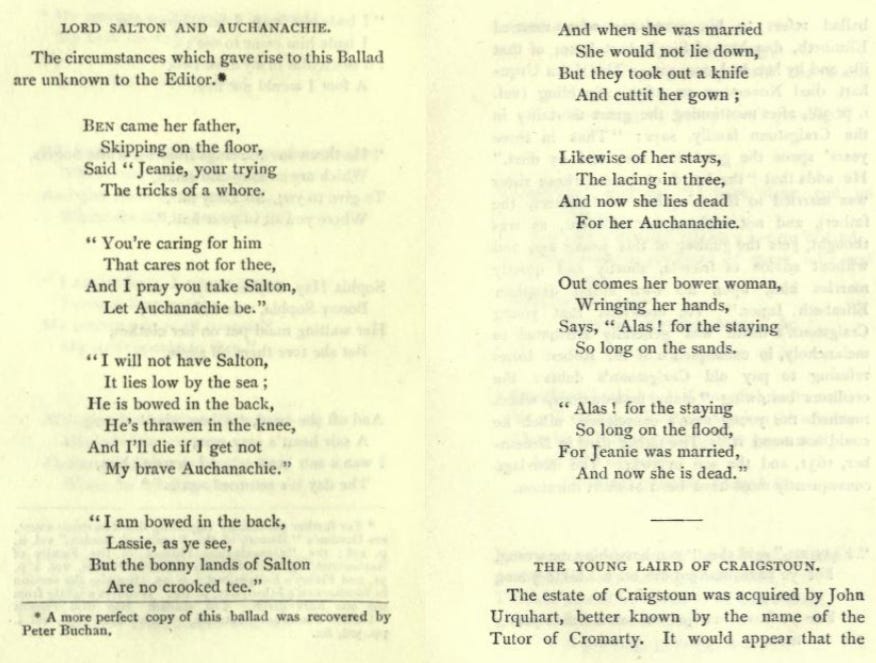
A complete version of this ballad first appeared in Peter Buchan’s “Ancient Ballads and Songs of the North of Scotland”, with the following short note:
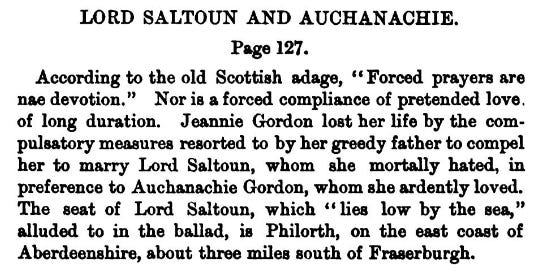
Buchan was well known for “filling out” incomplete ballads - this may be one of those cases, as a few years prior, a fragmentary version of unknown provenance appeared in Maidment’s 1824 “A North Countrie Garland”.
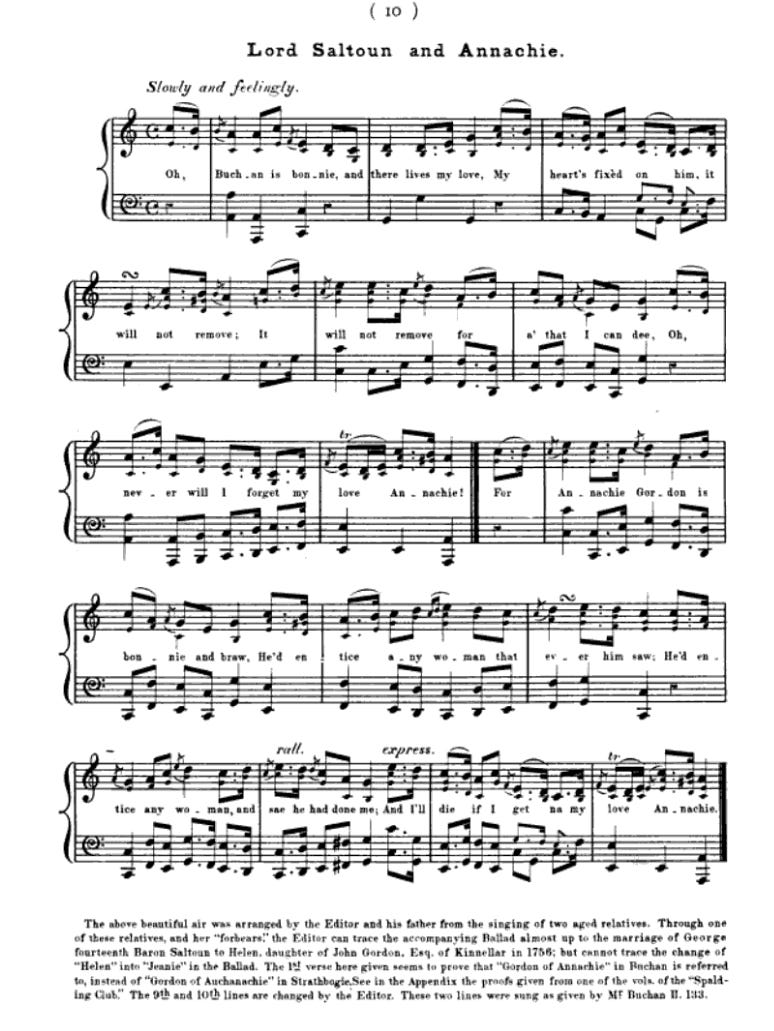
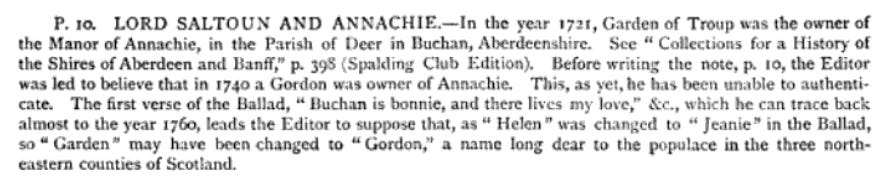
The key to our modern recordings comes later, in 1876, with William Christie’s version published with the only known tune:
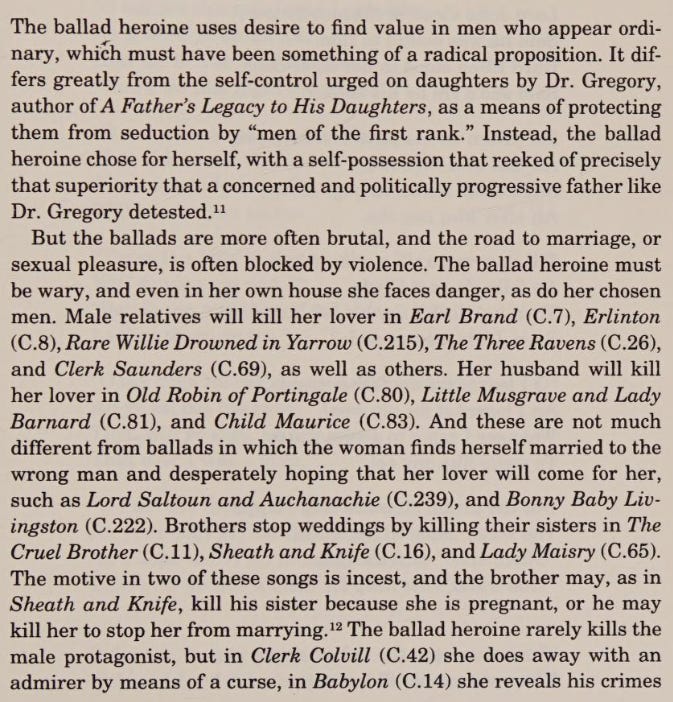
I found a reference to his ballad in an interesting volume, “Weep not for me : women, ballads, and infanticide in early modern Scotland” (1997) by American academic Deborah Symonds, in which she highlights the important themes of male control and violence towards women.